 EN
EN

Moisture retention is the single most critical performance factor for any wet wipe product. When sealed wipes lose their moisture before use, they fail entirely at their intended purpose — leaving hands unclean, skin irritated, and users disappointed. Understanding exactly how sealed wipes maintain their internal moisture environment from production through end use is essential for anyone sourcing, specifying, or distributing wipe products in hospitality, travel, food service, or personal care sectors.
Sealed wipes rely on a combination of packaging engineering, barrier material science, and saturation chemistry to remain effective over time. A well-designed sealed wipe can retain its moisture content for months or even years without any degradation in performance, provided the seal integrity is preserved. This article explores the mechanisms behind moisture lock, the role of packaging structure, and how sealed wipes are engineered to deliver consistent freshness every single time they are opened.
The Science of Moisture Lock in Sealed Wipes
How the Seal Creates an Airtight Environment
Sealed wipes achieve moisture retention primarily through the physical integrity of the package seal. Whether produced as four-sided sealed wipes or pillow-pack formats, the sealing method creates a completely enclosed atmosphere around the wet wipe substrate. This enclosed space prevents evaporation by eliminating the air exchange pathways that would otherwise allow moisture to escape. Sealed wipes formed with heat-bonded edges are particularly effective because the thermal bonding fuses the film layers into a continuous barrier rather than relying on adhesive alone.
The film used in sealed wipes is typically a multilayer laminate combining polyethylene, polypropylene, or aluminum foil layers. Each layer serves a distinct function: the outer layer provides structural durability, the middle layers block oxygen and moisture vapor transmission, and the inner layer provides food-safe or skin-safe contact properties. When sealed wipes are manufactured with these materials, the result is an enclosure that actively resists moisture loss even under varying temperature and humidity conditions during storage and transport.
Saturation Levels and Lotion Chemistry
The moisture in sealed wipes is not simply water. It is typically a formulated lotion containing water, surfactants, skin conditioners, and preservation agents. The saturation level of sealed wipes must be calibrated precisely — too little moisture results in ineffective cleaning, while too much causes dripping and waste. Formulators of sealed wipes calculate the precise ratio of lotion absorbed by the nonwoven substrate relative to the substrate weight, ensuring consistent moisture delivery from the first to the last use. Preservation systems within the lotion also prevent microbial growth inside sealed wipes, which would otherwise compromise both the lotion chemistry and the substrate integrity over time.
Packaging Design Factors That Prevent Drying Out
Four-Sided Sealing vs. Other Closure Methods
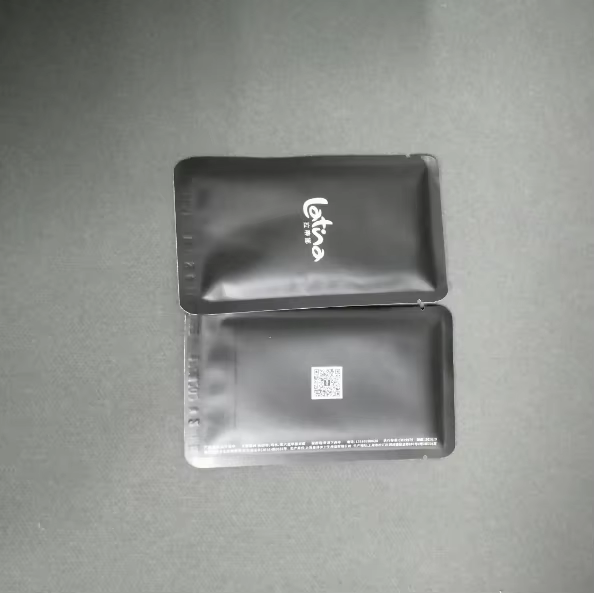
Sealed wipes produced with four-sided sealing offer a structural advantage over other closure formats. In a four-sided sealed wipe, all four edges of the package are individually bonded, creating a rectangular enclosure with no open corners or fold-based closures. This design eliminates the micro-gaps that can appear in tri-seal or fold-and-tuck formats, which are common failure points for moisture loss. For sealed wipes distributed in high-temperature environments such as restaurant kitchens or outdoor catering events, four-sided sealing provides measurable additional protection against evaporation compared to formats with fewer sealed edges.
Sealed wipes using peel-and-reseal tabs introduce a secondary challenge: the reseal function must maintain the original seal strength across multiple open and close cycles if intended for partial use. For single-use sealed wipes, this concern is eliminated entirely because the package is discarded after opening. Single-use sealed wipes are therefore the most reliable format for consistent moisture delivery, as there is no repeated mechanical stress on the sealing edge prior to use.
Film Thickness and Barrier Performance
Film thickness directly affects how well sealed wipes resist environmental moisture loss. Thinner films, while reducing material cost and weight, allow greater moisture vapor transmission through the film walls. Premium sealed wipes specify film gauges that balance barrier performance against flexibility and tear resistance. A film that is too rigid may crack at the seal edges during handling, which creates microscopic breaches that allow sealed wipes to dry out gradually. The optimal film specification for sealed wipes intended for banquet, restaurant, or hotel use is typically a middle-range gauge that provides both flexibility and adequate barrier performance for distribution chains spanning multiple weeks or months.
Practical Implications for B2B Sourcing of Sealed Wipes
Shelf Life Expectations and Storage Conditions
Buyers sourcing sealed wipes for hospitality or food service applications should evaluate stated shelf life claims in context. Sealed wipes with proper film specifications and high-quality sealing equipment can maintain moisture integrity for eighteen to twenty-four months under standard warehouse conditions. However, sealed wipes stored in environments with elevated temperatures or direct sunlight exposure may experience accelerated moisture vapor transmission through the film, reducing effective shelf life. Procurement teams should request sealed wipes with clearly stated storage condition requirements and validate those requirements against their actual logistics and storage environments.
For banquets, parties, travel kits, and hotel amenity programs, sealed wipes must remain fresh not only during warehouse storage but also through final-mile distribution, table setting, guest room placement, and extended holding periods. Sealed wipes engineered with high-barrier films and robust four-sided sealing perform reliably across these extended distribution chains, delivering the same fresh moisture experience at the point of use as they did on the day of manufacture.
Custom Specifications That Support Moisture Retention
When ordering sealed wipes with custom branding or logo printing, the print method and surface treatment of the outer film can affect barrier performance if not properly specified. Solvent-based inks applied to the outer surface of sealed wipes packaging should be fully cured before filling to avoid chemical interaction with the film laminate. Water-based printing on sealed wipes does not present the same risk but may require UV-protective top coatings if the sealed wipes will be displayed or stored under fluorescent lighting for extended periods. Buyers should communicate these environmental factors to suppliers so that sealed wipes specifications can be adjusted accordingly.
Lotion formulation is another customizable element that affects how sealed wipes maintain moisture. Higher glycerin or humectant concentrations in the lotion extend the perceived moisture experience on skin after the sealed wipes are opened, even if minor moisture loss has occurred in a compromised package. Matching lotion chemistry to intended use conditions is a practical strategy for ensuring that sealed wipes always feel fresh and effective, regardless of minor variability in storage conditions across a long supply chain.
FAQ
What makes sealed wipes stay moist longer than open-pack wipes?
Sealed wipes create a fully enclosed environment that eliminates air exchange, preventing evaporation. Open-pack wipes rely on resealable lids or flaps that allow repeated air entry, which gradually dries out the remaining wipes. Individual sealed wipes maintain a fresh, isolated moisture environment for each unit until the moment it is opened.
How do I verify the seal quality of sealed wipes before placing a bulk order?
Request sealed wipes samples and conduct a basic pressure test by squeezing the package to detect any air leakage or looseness at the seam edges. Also review the supplier's quality control documentation for seal strength testing, moisture content measurement, and shelf-life validation. Reliable producers of sealed wipes will provide batch test reports confirming seal integrity across production runs.
Can sealed wipes lose moisture even before the package is opened?
Yes, sealed wipes can lose moisture gradually if the film barrier is too thin, if the seal edges are mechanically stressed during transport, or if storage temperatures are significantly elevated. Choosing sealed wipes manufactured with high-barrier multilayer films and validated four-sided sealing processes minimizes this risk significantly, ensuring the wipe inside remains fully saturated at the time of use.